Supply Chain Risk Management: Building Resilience for B2B Operations
The events of the past five years permanently changed how sophisticated B2B companies think about their supply chains. Pandemic shutdowns, Suez Canal blockages, port strikes on the US West Coast, Section 301 tariff escalations — the list of disruptions that caught unprepared companies off guard is long.
The companies that survived these shocks without catastrophic losses had one thing in common: they had invested in supply chain resilience before they needed it.
The Four Categories of Supply Chain Risk
Understanding risk begins with categorizing it correctly:
1. Supply-Side Risk
Disruptions that originate with your suppliers or their suppliers:
- Supplier factory shutdowns (fire, labor dispute, insolvency)
- Raw material shortages
- Quality failures at the source
- Single-source supplier dependency
2. Transportation and Logistics Risk
- Port congestion and vessel delays
- Carrier bankruptcies or capacity shortfalls
- Labor disputes (dock workers, truckers)
- Infrastructure failures (bridge collapses, rail disruptions)
3. Geopolitical and Regulatory Risk
- Tariff escalations (Section 232, Section 301, antidumping duties)
- Trade sanctions and embargoes
- Country-of-origin requirements
- Import bans on specific goods or materials
4. Demand-Side Risk
- Sudden demand spikes (creates stockouts)
- Sudden demand drops (creates overstock)
- Customer concentration (losing a key account disrupts your purchasing volume)
The Resilience Framework: PROTECT, DETECT, RESPOND
PROTECT — Structural Risk Reduction
Dual sourcing: Never rely on a single supplier for critical components. Maintain a qualified backup supplier, even at a 10–20% premium. The insurance value far exceeds the cost.
Inventory buffering: Calculate your Days of Supply for each critical SKU. For items sourced from overseas with 30+ day lead times, holding 45–60 days of safety stock is rational.
Geographic diversification: If 100% of your sourcing is from a single country, you have a geopolitical concentration risk. Many companies are currently reducing China dependence by developing suppliers in Vietnam, India, Mexico, and Eastern Europe.
Contractual protections: Ensure your supplier contracts include force majeure clauses, clear liability for delays, and priority allocation rights during shortage periods.
DETECT — Early Warning Systems
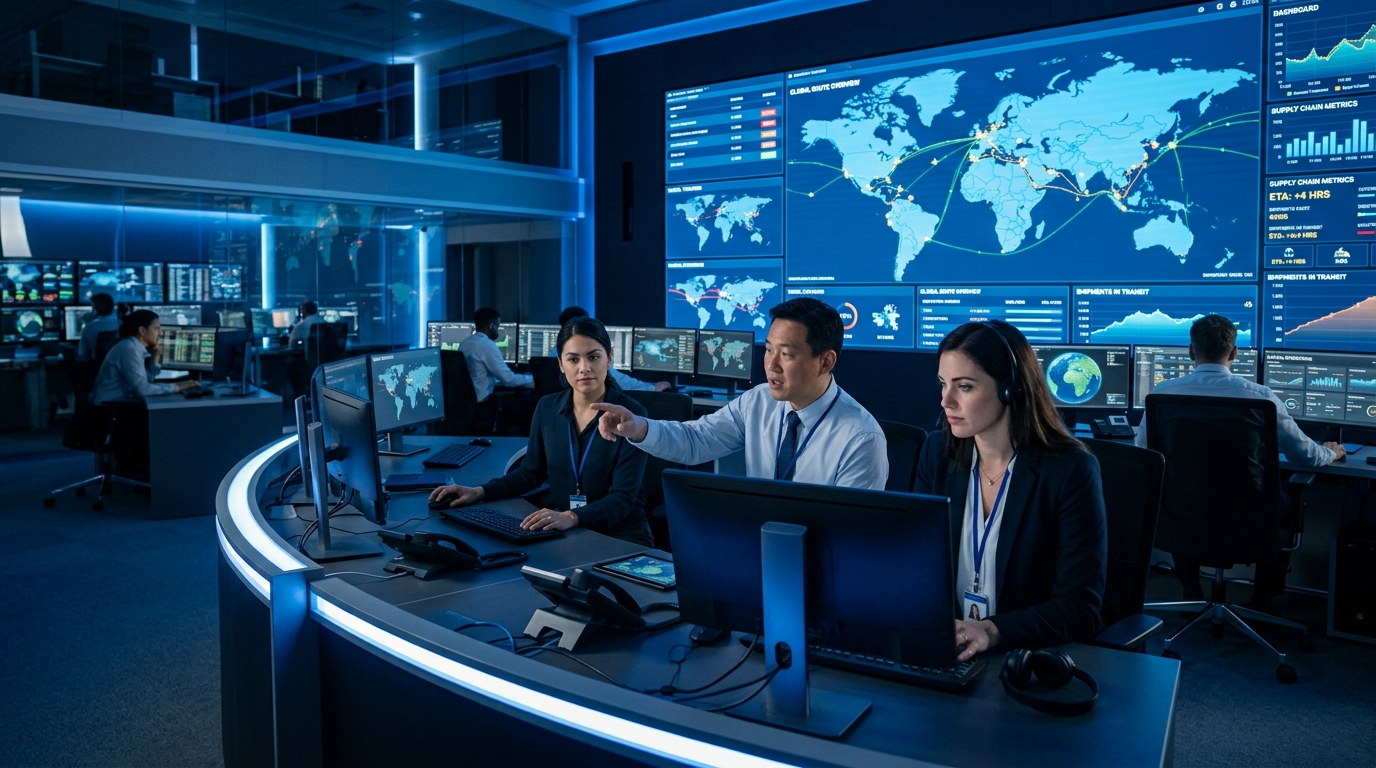
Supply chain visibility technology: Modern TMS and supply chain management platforms provide real-time tracking across your entire vendor base. You should know where every inbound shipment is at every moment.
Supplier financial monitoring: A supplier that is going bankrupt gives signals 6–12 months before the failure. Monitor your key suppliers' financial health using platforms like Dun & Bradstreet or CreditSafe.
News and geopolitical monitoring: Set up Google Alerts for labor news at your key ports of loading. Port strikes rarely happen without weeks of advance warning.
Lead time monitoring: Track your average lead times by supplier and by lane. A sudden 20% increase in lead time is an early warning signal of stress in that part of your supply chain.
RESPOND — Disruption Response Protocols
When a disruption occurs, the difference between companies that recover quickly and those that don't is almost always the existence of a documented response playbook.
Your playbook should include:
-
Who is the crisis decision-maker? Supply chain disruptions cannot wait for committee approval. Designate one person with authority to spend up to $X on emergency freight or inventory purchases.
-
What are the pre-approved alternative suppliers? You should have these contracted and qualified before you need them.
-
What is your air freight authorization level? Define thresholds in advance: if a stock-out will cost >$10,000 in lost production, air freight up to $X is pre-approved.
-
How do you communicate with customers? Draft your customer communication templates in advance so you are not writing them in a crisis.
The Cost of Resilience vs The Cost of Disruption
Many procurement teams resist investing in resilience because it adds cost. This is the wrong framework.
Calculate your disruption cost exposure:
- What does one day of production stoppage cost?
- What does losing a key customer due to chronic stockouts cost?
- What would a 20% tariff increase on your core product category cost annually?
For most B2B companies, a single major disruption costs 10–50x what a proactive resilience investment would have cost.
How Best Internation Resources Supports Supply Chain Resilience
We help our clients build resilient supply chains in several concrete ways:
- Multi-lane carrier relationships: We maintain active relationships with multiple carriers on every major trade lane, so when one carrier has a capacity problem, we have alternatives immediately available.
- Mode flexibility: We can shift clients from ocean to air or from standard to expedited without requiring new contracts or onboarding.
- Real-time disruption intelligence: Our operations team monitors global shipping disruptions daily and proactively informs clients of developing situations before they become emergencies.
Contact us to discuss a supply chain resilience assessment for your business.